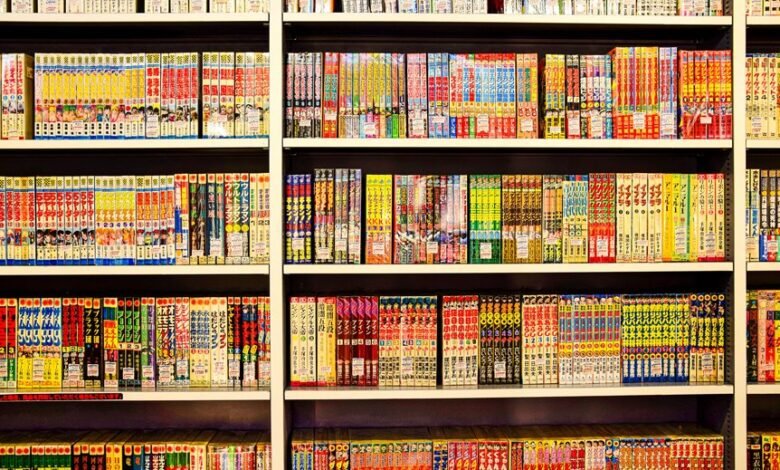
Light novels prioritize prose-driven worldbuilding and interiority, while manga trades in rapid visual rhythm and panel economy. The former builds dense, unspoken context through narration; the latter relies on framing, pacing, and sequence to convey immediacy. Juxtaposition reveals distinct trade-offs: textual density versus image-driven coherence. The question persists when audiences seek either tonal nuance or kinetic clarity, and the answer rests on preference for textual depth over pictorial immediacy—or vice versa, as the next threshold awaits.
What Light Novels Do So Well: Prose-Driven Worldbuilding
Light novels excel at constructing expansive, prose-driven worldbuilding through dense descriptive prose, meticulous temporal pacing, and a focus on interior perception that ordinary dialogue-driven narratives often undercut.
The analysis compares narrative scaffolding, prose focused immersion, and worldbuilding depth, revealing how texture and cadence substitute for visual detail.
Detached evaluation highlights systematic authorial control, cognitive layering, and genre-specific parameters shaping readerly perception and freedom-oriented interpretive latitude.
How Manga Shapes Pace and Visual Storytelling
Manga orchestrates pace through a deliberate interleaving of panel economy, temporal compression, and visual rhythm, yielding a cadence that can accelerate action or slow contemplation with surgical precision.
Comparative analysis reveals manga pacing hinges on sequential rhythm, gutter meaning, and size variation, translating prose tempo into frames.
Visual storytelling emerges as a disciplined syntax, where composition, movement, and framing govern reader interpretation and engagement.
Side-by-Side Criteria: Story, Characters, and Atmosphere
Side-by-side analysis of story, characters, and atmosphere reveals how the two media marshal distinct evaluative axes: narrative architecture, characterization vectors, and tonal texture. In comparative appraisal, story depth exposes how plot scaffolding and pacing diverge; characters register through design and arc progression, while atmosphere emerges from art style interventions. Freedom-minded readers notice discrete evaluative rationales shaping adaptation potential and aesthetic valuation.
Choosing Your Path: When to Read Light Novels vs Manga-And When to Adaptations Matter
Choosing the optimal consumption path hinges on evaluating audience objectives, pacing preferences, and fidelity requirements; observers can, therefore, align format choice with what each medium uniquely affords.
The decision hinges on Choosing pacing vs illustration as a spectrum and localization versus translation as a constraint; adaptations intensify speed and visual coherence, while originals maximize nuance, prompting a measured trade-off between textual depth and illustrated immediacy.
Frequently Asked Questions
Do Light Novels Ever Surpass Manga in Popularity?
Which niche readership can propel light novels to surpass manga in popularity, given licensing trends, publishing economics, reader demographics, platform ecosystems, marketing strategies, and evolving licensing trends, the answer depends on platform ecosystems and targeted demographics.
Which Format Offers Better Character Development Pacing?
The allegory compares two engines: light novels cultivate character development with deliberate pacing; manga accelerates pacing differences through visuals, often compressing arcs. Overall, character development favors novels, while pacing differences favor manga’s efficient, freedom-seeking, analytical audience.
Are Adaptations Ever Preferable to Original Source Material?
Adaptations can be preferable when adaptation bias and reader expectations converge, enabling efficient triangulation of themes; nonetheless, perceived fidelity competes with transformative gains, sustaining analytical tension between source material nuance and platform-driven interpretive scope.
How Do Artwork and Illustrations Influence Reader Immersion?
art style shapes reader imagination by guiding pacing dynamics and panel composition; adaptation quality and narrative voice interact with fan expectations, revealing how visuals constrain or liberate immersion, while readers negotiate freedom against stylistic conventions and analytical criteria.
Can Reading Order Affect Enjoyment Across Formats?
Reading order influences enjoyment: deliberate sequencing modulates reader immersion, with pacing differences shaping visual storytelling across formats; in analysis, order alters cadence, guiding interpretation while balancing reader autonomy and comparative structural expectations.
Conclusion
Light novels and manga function as parallel engines of narrative resonance, each optimizing distinct sensory channels. Prose-driven worlds in light novels cultivate granular interiority and structural foreshadowing, while manga choreographs tempo through panel economy and visual cadence. Side-by-side criteria reveal comparable ambitions—story architecture, character psychology, atmospheric coherence—yet diverge in execution. Choosing hinges on reader appetite for dense lattices of thought versus immediate, viscerally framed scenes. Adaptations, by design, trade optional nuance for streamlined coherence, a trade-off that reshapes readerly immersion across formats—albeit toward the same narrative horizon. Chrono-gloom.