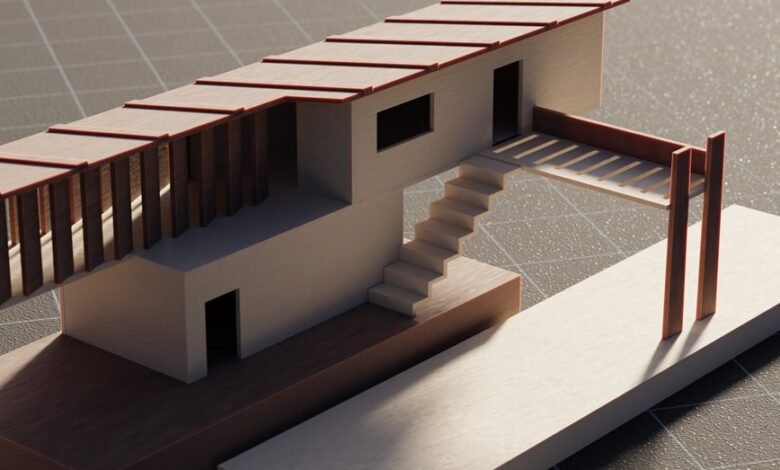
Flyarchitecture net inside the home envisions an integrated fabric of sensors, processors, and actuators woven into ceilings, walls, and furniture. It emphasizes centralized control, contextual awareness, and privacy-preserving autonomy through modular, upgradeable components. Materials are chosen for durability and ethical sourcing, with transparent accountability. Interfaces—textured nets and floating meshes—offer unobtrusive feedback that supports adaptive control while preserving aesthetic autonomy. The approach invites scrutiny of maintenance, privacy trade-offs, and robust biosecurity standards, inviting further examination.
What Is Flyarchitecture Net Inside the Home?
Flyarchitecture Net Inside the Home refers to a design paradigm that integrates networked devices and computing resources directly within residential spaces. It enables seamless data exchange, contextual awareness, and centralized control while preserving user autonomy. The approach foregrounds design ethics in decision-making and material sourcing considerations, ensuring durable, low-impact components. Clarity and accountability guide implementations, balancing performance with occupant freedom and privacy.
How to Design Net-Driven Living Spaces?
Designing net-driven living spaces requires a systematic approach to integrate sensing, processing, and actuation within daily environments while maintaining user agency.
The design considerations balance responsiveness with privacy, ensuring intuitive control and predictable behavior.
Attention to material durability supports long-term reliability, while modular components enable future upgrades.
A disciplined methodology clarifies constraints, opportunities, and ethical implications, guiding resilient, freedom-focused integration into homes.
Practical Applications: Ceilings, Walls, and Furniture
Ceilings, walls, and furniture serve as integral interfaces for net-driven systems, enabling distributed sensing, processing, and actuation without intruding on user workflows. The approach leverages net textures and floating meshes to embed contextual intelligence into surfaces, enabling subtle adjustments and feedback without visible infrastructure. This configuration sustains aesthetic autonomy while supporting adaptive, collective control across interiors with minimal friction.
Pros, Cons, and Maintenance of Net Interior Systems
Net interior systems present a balance of advantages and challenges that gate adoption in everyday spaces. They offer flexible spatial zoning, aesthetic novelty, and modularity, yet pose maintenance demands, potential durability issues, and privacy trade-offs.
Biosecurity considerations require rigorous filtration and sanitation protocols, while ethical implications center on consent, data collection risks, and equitable access. Careful evaluation enables informed, freedom-respecting integration.
Frequently Asked Questions
How Does Flyarchitecture Net Impact Indoor Air Quality?
Fly architecture affects indoor air quality by modulating airflow and filtration, balancing ventilation with comfort. It raises privacy concerns and safety considerations, prompting careful system design, monitoring, and maintenance to preserve air quality while supporting user freedom and autonomy.
What Are Cost Estimates for a Full Home Deployment?
Cost estimates for full deployment vary by home size and components, but typically range from moderate to substantial, depending on system complexity; precise figures require site assessment, material costs, installation labor, and ongoing maintenance considerations. The project demands measured deliberation.
Is Professional Installation Required or DIY Feasible?
DIY feasibility is possible for some components, but overall professional installability improves reliability and safety. The approach varies by system complexity; a hybrid DIY-plus-professional model often yields optimal performance, scalability, and compliance with standards.
How Scalable Is the System for Multi-Story Homes?
It is scalable deployment capable of multi story integration, though practical limits depend on bandwidth, routing, and zoning. The system supports layered expansion, enabling independent rooms and floors while preserving centralized control and flexible configuration for a freedom-seeking audience.
Are There Privacy and Safety Concerns With Net Installations?
Privacy concerns and safety considerations accompany net installations; studies show 12% of households report privacy worries. The analysis notes potential breaches, entanglement hazards, and installation integrity, urging robust monitoring, clear user controls, and compliant, transparent safety protocols for freedom-loving audiences.
Conclusion
Flyarchitecture net inside the home blends high-tech nets with everyday spaces, yet remains tethered to human scale. Its precision and fluidity juxtapose rigidity of materials with softness of interaction; privacy concerns counterbalance centralized control with autonomous pragmatism. The vision promises seamless orchestration, but maintenance and ethics must cohabit the same frame as aesthetics. In this balance, functionality and form wrestle, revealing that true integration hinges on transparent governance as much as clever design.