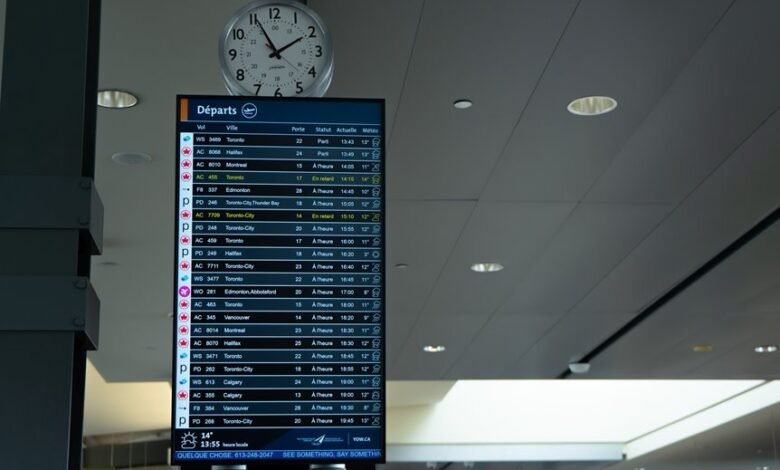
Departure Time Fight sd1555958a examines how scheduling pressures shape airline operations and passenger behavior. The study highlights window constraints, crew rotations, gate availability, and their influence on turnover and on-time performance. Subtle changes in boarding sequences signal stress markers among travelers, while delay psychology shapes anticipation and coping strategies. The countdown clock and terminal flow emerge as tangible levers for resource allocation and bottleneck management, prompting questions about resilience and optimization under variability. The implications demand further scrutiny.
What Departure Time Fight Reveals About Flying
The Departure Time Fight reveals how scheduling pressures shape airline operations and passenger behavior.
Departure dynamics emerge from window constraints, crew rotations, and gate availability, influencing turnover rates and on-time performance.
Data indicate subtle shifts in boarding sequences correlate with stress markers in travelers.
The analysis highlights delay psychology: anticipation, coping strategies, and resilience, shaping risk profiles and operational adjustments.
The Countdown Clock: How Timing Drives Terminal Chaos
As departure scheduling pressures accumulate, the Countdown Clock emerges as a tangible driver of terminal dynamics, translating time constraints into observable crowd movement, queue patterns, and service bottlenecks.
Data indicate correlated shifts in departure psychology and gate management efficiency, with minute-by-minute clocks forecasting congestion waves, staffing strain, and resource reallocation, guiding operational adjustments toward smoother throughput and greater traveler autonomy.
Real Voices: Passenger Frustration, Crew Constraints, and Human Wins
Real Voices reveal how traveler frustration, crew constraints, and moments of resilience shape the boarding ecosystem.
Data indicates that delayed resilience emerges when schedules tighten, revealing bottlenecks in process timing and information flow.
Observations point to a strengthening safety culture as crews adapt, communicate, and enforce protocols, mitigating risk while confronting variability typical of air operations.
Navigating the Mess: Practical Tips for Coping With Delays and Gate Shuffles
Delays and gate shuffles introduce operational uncertainty that travelers must navigate with disciplined, data-informed strategies. The analysis favors proactive planning, real-time updates, and objective risk assessment to minimize disruption.
Travelers cultivate adaptability, document patterns, and maintain resource buffers. Settled routines become unsettled routines, yet disciplined behavior preserves momentum.
Boarding rituals remain consistent, even when gate assignments shift, preserving efficiency and reducing cognitive load.
Frequently Asked Questions
What Caused the Delay to Begin With in This Case?
The delay originated from operational disruptions, including crew availability and sequencing issues, supported by tracking tools showing intermittent weather and routing constraints; analysis indicates minor cascading effects, with passenger impacts minimized, though some rebooking and communication delays persisted due to data gaps.
How Do Airlines Decide Compensation for Delays?
Airlines determine delay compensation by applying regulatory thresholds and carrier policies, evaluating disruption duration, passenger inconvenience, and flight distance; calculations consider gate operations data, boarding counts, and on-time performance, yielding objective compensation ranges aligned with industry benchmarks and freedom-oriented policy transparency.
Which Airports Most Commonly Experience These Gate Shuffles?
Gate shuffles most commonly occur at busy hubs: Atlanta, Chicago O’Hare, Dallas/Fort Worth, Los Angeles, and London Heathrow. Airport operations, Weather delays, Gate assignments, and Crew availability drive these shifts; patterns emerge from data-driven congestion and turnaround pressures.
Are There Systemic Issues Behind Repeated Departures?
Systemic inefficiencies, routing bottlenecks, and gate allocation challenges underpin repeated departures, indicating structural issues rather than isolated incidents. Data show interdependent constraints pressure streams, extending turnaround times and elevating variability across networks, though aviation freedom remains constrained by schedules and demand.
How Can Passengers Track Real-Time Departure Updates?
Tracking systems tighten timely transparency; passenger apps provide precise pointers. Departure clarifications reduce confusion, while gate synchronization streamlines spacing. The analysis shows consistent gaps in data latency, yet effective dashboards deliver dependable, decision-ready departure updates for free-spirited travelers.
Conclusion
As schedules tighten, the clock exposes fragility: every minute til departure reshapes queues, gate reassignment, and crew rotations. The data reveal a quiet calculus—late pushbacks cascade into cascading delays, while early departures crowd the margins with crowding stress. Yet within the numbers lies a stubborn resilience: faster re-gating, adaptive staffing, and real-time reallocation dampen volatility. The countdown persists, keeping passengers poised on the edge—an analytics-driven hinge between disruption and controlled throughput, awaiting the next unforeseen twist.